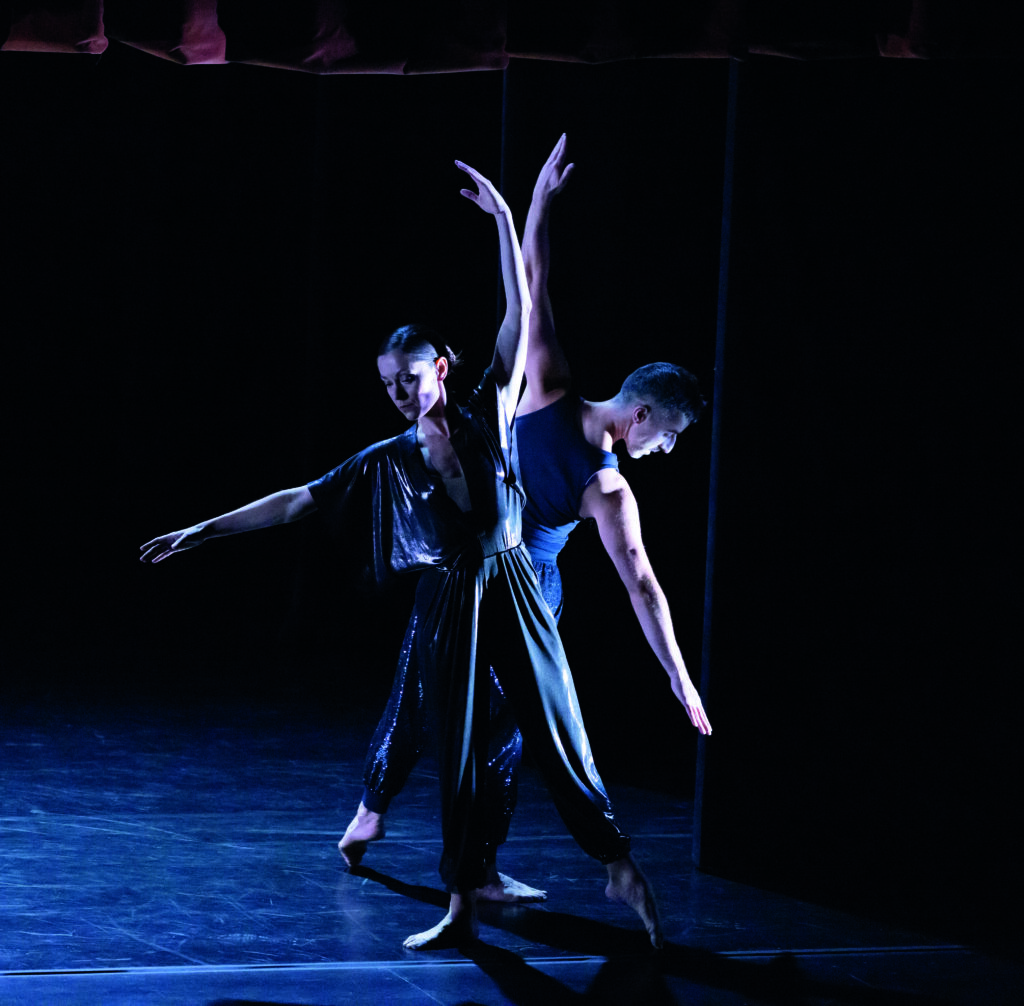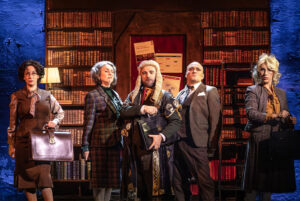
A celebration of many forms of dance from ballet companies from across the globe brought together for us to enjoy in four iconic landmarks across London over the next couple of months. But this is not thanks to the support of public arts bodies, rather a Parisian jewellers that has been plying its trade since the Edwardian era. Dance Reflections by Van Cleef & Arpels London 2025 runs from 12th March to 8th April.
In a time of increased pressure on public funding for the arts, the support of this 119-year-old jewellery house (founded in Paris in 1906) allows an exceptional array of some of the best contemporary dance from all points of the globe to be seen at four major London venues. The programme includes work by contemporary dance pioneers like Trisha Brown (at both the Royal Ballet & Opera and Sadler’s Wells) and Merce Cunningham (with two of his classic pieces from Lyon Opera Ballet at Sadler’s Wells).
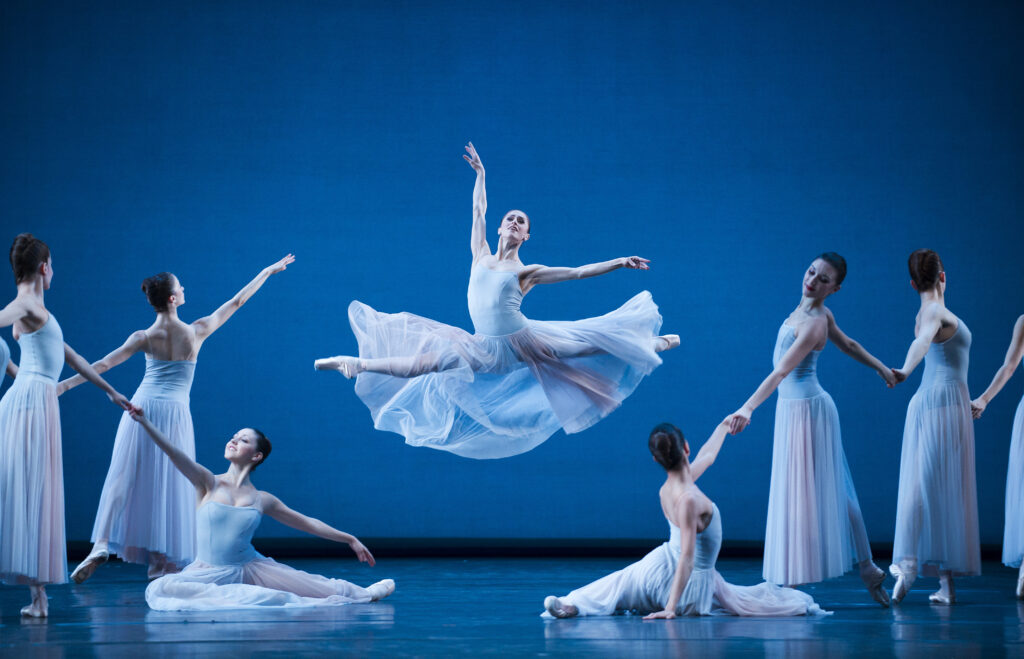
A new wave of experimental talent such as Soa Ratsifandrihana and Georges Labbat, both at Sadler’s Wells’ Lilian Baylis Studio, Shu Lea Cheang and Dondon Hounwn at Tate Modern, Robyn Orlin at Southbank Centre and three George Balanchine pieces(above) from the Royal Ballet, with the earliest ballet Prodigal Son from 1929 perfectly kicking off the Dance Reflections century of contemporary dance.
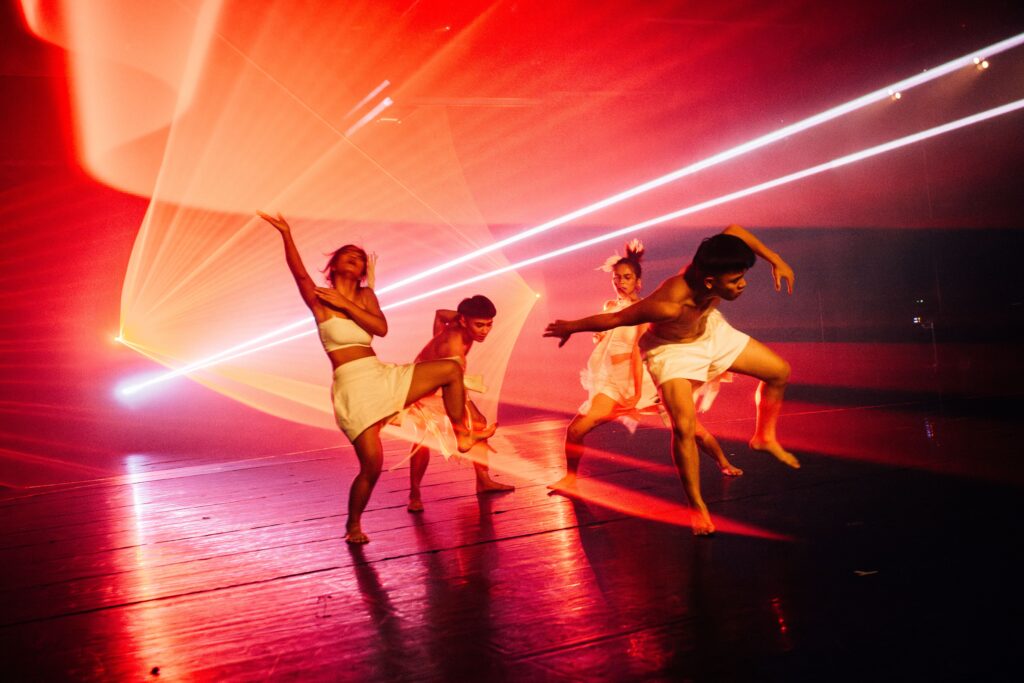
Experience the premiere of this theatrical performance by artists Shu Lea Cheang and Dondon Hounwn drawing together ancient myths with futuristic technologies. Through dance, movement, instrumentals, ritual and chant, Hagay Dreaming recounts a story based on ancient legend connected to the Truku indigenous culture of Taiwan. In her dreams, a hunter meets a group of spiritual non-binary beings called ‘Hagay’, and they pass on ancestral knowledge of living, weaving and hunting.
On stage, performers move within intricate light beams projected by a choreography of lasers. This new theatrical production is an artistic collaboration by Taiwanese American artist Shu Lea Cheang and indigenous performance artist and practising shaman Dondon Hounwn. Shu Lea Cheang often creates sci-fi narratives and in Hagay Dreaming the pair present an artistic vision for a future reality based on the ‘Gaya’ living principle of the Truku people. For them, Gaya is a spiritual world that is everywhere and everything, in which all living creatures are understood as connected and non-binary.
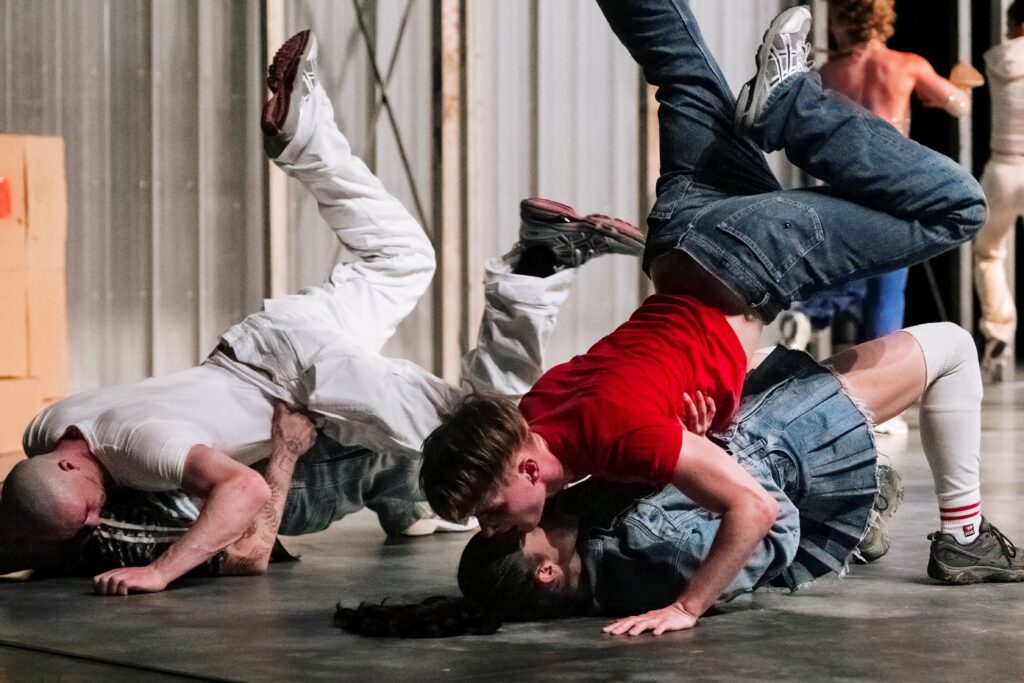
With more and more realistic avatars and smoother photographic filters, the boundaries between real-life and virtual bodies are blurring. (LA)HORDE turns this grey area into a new territory for critical exploration. Lost in a mysterious world which borrows as much from bunkers as it does from industrial warehouses and cliff scenery, we all come face-to-face with other potential versions of ourselves. At the heart of this monumental stage design,
a melancholic testament to the states-of-mind and body of those who inhabit it, there is a fight scene.
Using this flaw in the machine as a starting point, (LA)HORDE pursues the entanglement of virtual and real lives through this new creation for the Ballet national de Marseille. Because, in this age of content, and over-abundance, boundaries are more porous than they appear. Drawing on the Internet’s aesthetic facets of distraction, accumulation and collage, and moving from the strange familiarity of a Grand Theft Auto (GTA) videogame character to a TikTok dance mash-up, the group uses choreographic art as a tool to give critical distance. Together they highlight, more than ever, the power of the stage as a space where boundaries can be pushed, and spells can be broken.
Just a small sample of the delights that are on offer, for further information, please go to the festival website
Images
Top – George Balanchine, Serenade, -Royal Ballet-Royal Opera House
Shu Lea Cheang + Dondon Hounwyn’s Hagay Dreaming, photo (C) Hsuan Lang Lin (林軒朗)
Ballet National de Marseille + (LA) HORDE, Age of Content, photo (c) Blandine Soulage
Below Pam Tanowitz, Neither Drums Nor Trumpets, photo (c) Mark Garvin